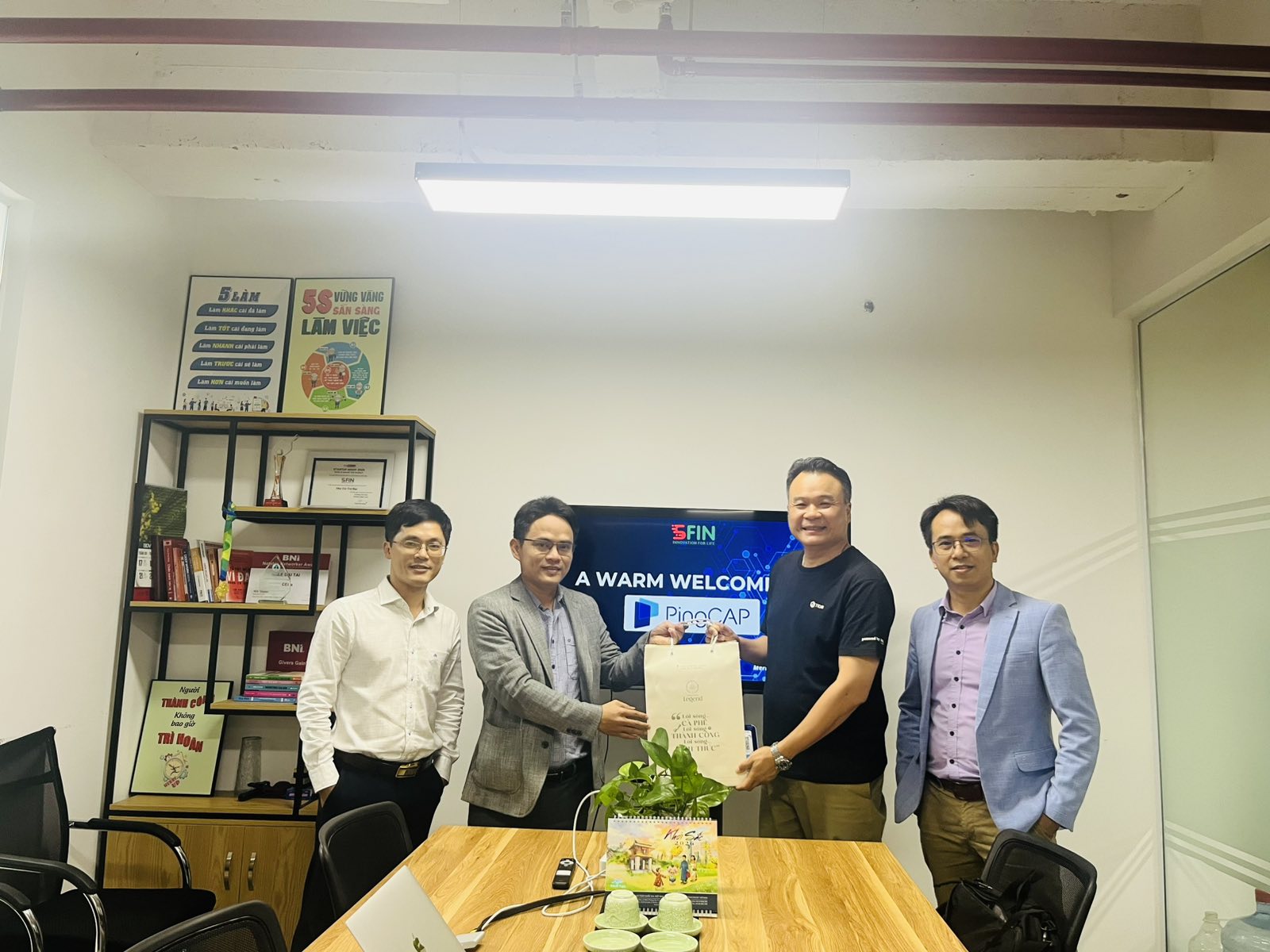
SFIN Officially Partners With PingCap: A New Chapter in Fintech Data Infrastructure
As Vietnam’s financial technology sector generates transaction volumes measured in billions of records annually, the underlying data infrastructure must evolve to match. SFIN JSC has formalized a strategic partnership with PingCap — the company behind TiDB, the world’s most widely adopted distributed SQL database — to modernize its Big Data processing backbone.
This is among the most consequential technology decisions SFIN has made in its journey toward becoming Vietnam’s leading fintech platform operator.
Technical Deep Dive: What Is TiDB and Why Does It Matter?
TiDB (Titanium Database) is a cloud-native, distributed SQL database engineered for Hybrid Transactional/Analytical Processing (HTAP) — the simultaneous execution of OLTP (Online Transaction Processing) and OLAP (Online Analytical Processing) workloads on a unified storage layer.
This eliminates the traditional requirement for separate operational databases and data warehouse clusters, reducing ETL pipeline complexity and enabling true real-time analytics on live transaction data.
Architecture Comparison: Traditional Stack vs. TiDB
| Dimension | Traditional RDBMS | TiDB (PingCap) |
|---|---|---|
| Horizontal scaling | Limited; requires hardware upgrade | Elastic horizontal scale-out |
| Concurrent workload | Performance degrades under high concurrency | Consistent performance at scale |
| Real-time analytics | Requires separate data warehouse | Native HTAP on production data |
| High availability | Single point of failure risk | Multi-replica Raft consensus; zero downtime |
| Operational cost | High at scale | Pay-as-you-scale model |
| MySQL compatibility | N/A | 100% MySQL protocol compatible |
In fintech — where latency is measured in milliseconds and data inconsistency directly translates to financial loss — TiDB’s architecture delivers exactly what SFIN requires: speed, consistency, and elastic scalability.
Three Core Engineering Benefits for SFIN’s Platform
1. Real-Time Analytics on Live Transaction Data
With TiDB’s HTAP architecture, SFIN can execute complex analytical queries directly against production transaction data — without the latency overhead of ETL pipelines to a separate analytics cluster. This enables:
Sub-second fraud anomaly detection within the transaction processing pipeline
Dynamic credit limit adjustments based on real-time behavioral signals
Live revenue and risk dashboards updated at transaction granularity
2. Personalization at Scale
With the ability to process millions of behavioral data points concurrently, SFIN’s product engineering teams can build:
Context-aware product recommendations surfaced at the exact moment of highest user intent
Dynamic credit scoring that adjusts in near real-time to evolving user behavior
Adaptive UX flows tailored to individual user segments and engagement patterns
3. Future-Proof Infrastructure for Platform Growth
TiDB serves as the architectural foundation for SFIN’s long-term platform strategy:
Unlimited horizontal scale: The database tier grows with user acquisition — no re-engineering required
Regulatory compliance: On-premises deployment capability satisfies SBV data residency requirements
Ecosystem integration: Full MySQL compatibility enables seamless integration with existing tooling (BI, ORM layers, data connectors)
Strategic Significance: The Broader Implication for Vietnam’s Fintech Industry
“This partnership with PingCap is not a database migration — it is a commitment to building data infrastructure that can serve Vietnam’s fintech ecosystem for the next decade.”
— SFIN JSC Leadership
For Vietnam’s broader fintech industry, this signals an inflection point: the era of monolithic relational databases for financial applications is ending. Organizations that adopt distributed, HTAP-capable data architectures early will enjoy durable competitive advantages in analytics velocity, operational efficiency, and personalization quality.
SFIN is proud to be among the first Vietnamese fintech companies operationalizing this architectural paradigm at enterprise scale.